ServicesRoof Inspections
Roof Inspections in Purcell
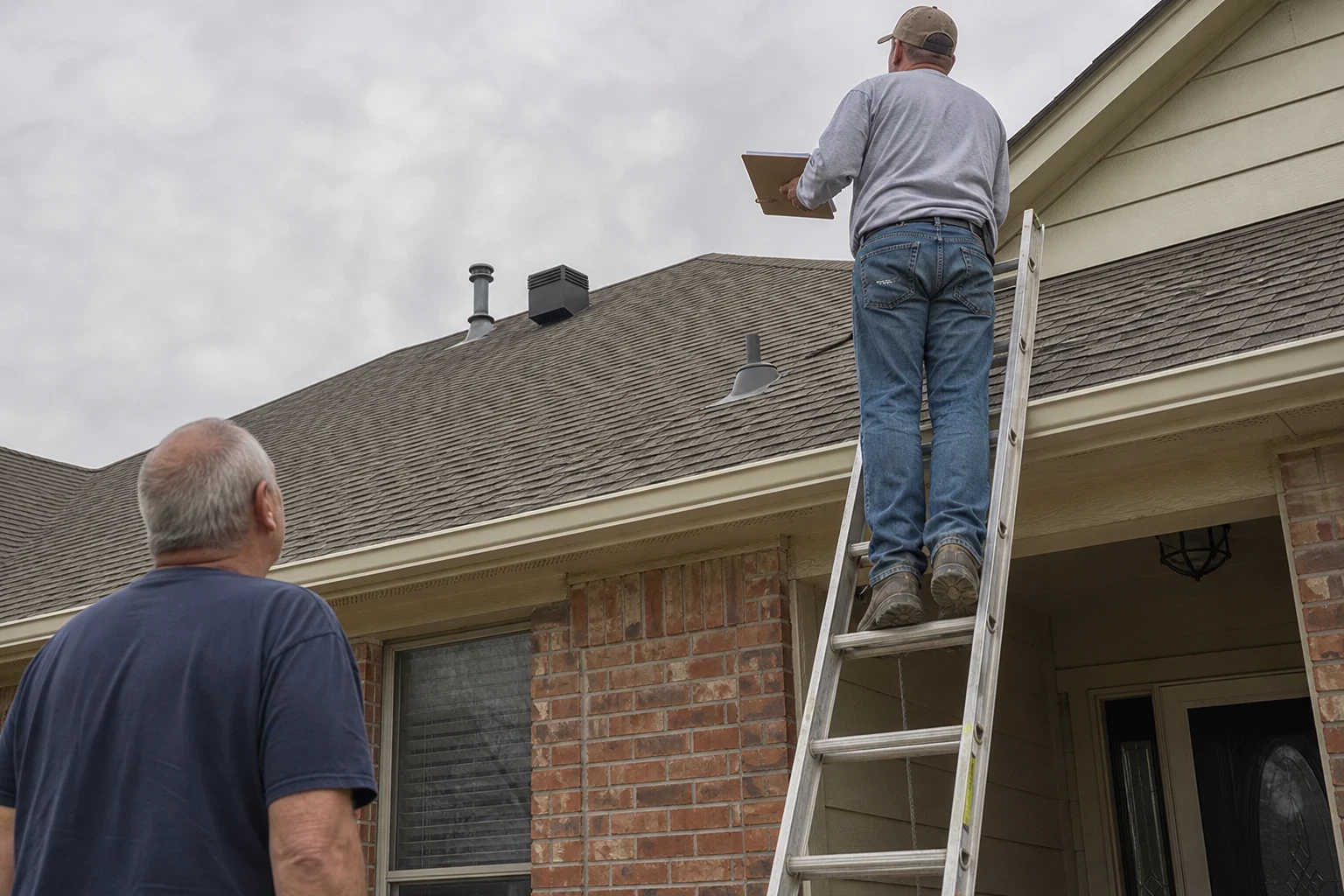
Wondering how your roof is really holding up? We get up on it, look closely at the shingles, flashing, vents and gutters, check the attic for moisture, then sit down with you to go over photos and give you a straight answer about what we found.
Know What's Happening on Your Roof
Most roof problems start small and stay out of sight. A shingle tab that has lifted, a cracked rubber collar on a vent pipe or a gap along the flashing can let water seep into the wood decking for a long stretch while your ceilings still look fine. Finding it on an inspection means the fix stays small, too.
We keep our team small on purpose. The person who inspects your roof is the one you'll talk with afterward, and if you decide to move ahead, that same crew does the work. You explain your roof one time, and no details slip through the cracks between people.
Some inspections end with a short list of repairs. Others end with good news that your roof has plenty of life left. Either way, you get an honest picture of the roof over your home and the freedom to choose what happens next.
What We Check During an Inspection
Shingles and roof surface
We look for shingles that are missing, cracked or curling, bare spots where the granules have worn away, and hail bruises that weaken the mat underneath. We also compare how each slope has aged.
Flashing and penetrations
Leaks tend to begin wherever the roof is interrupted, like around a chimney or skylight, along a sidewall, or at a plumbing vent. We inspect the metal flashing, the sealant and the rubber pipe boots for cracks, gaps and rust.
Vents and ridge
Without good airflow, a long Oklahoma summer bakes shingles from underneath, and winter can leave moisture trapped in the attic. We look at ridge vents, box vents and soffit intake to judge whether your attic is breathing properly.
Attic and decking
If the attic is reachable, we head inside and check for daylight coming through, water marks, damp insulation and decking that is soft or dark. Inside is often where we confirm what the shingles only suggest.
Gutters and drainage
We make sure the gutters are secure, pitched correctly and carrying water away from the fascia. Sagging or overflowing gutters can rot the roof edge, and we'll let you know if gutter work should be on your list.
Photos and a walkthrough
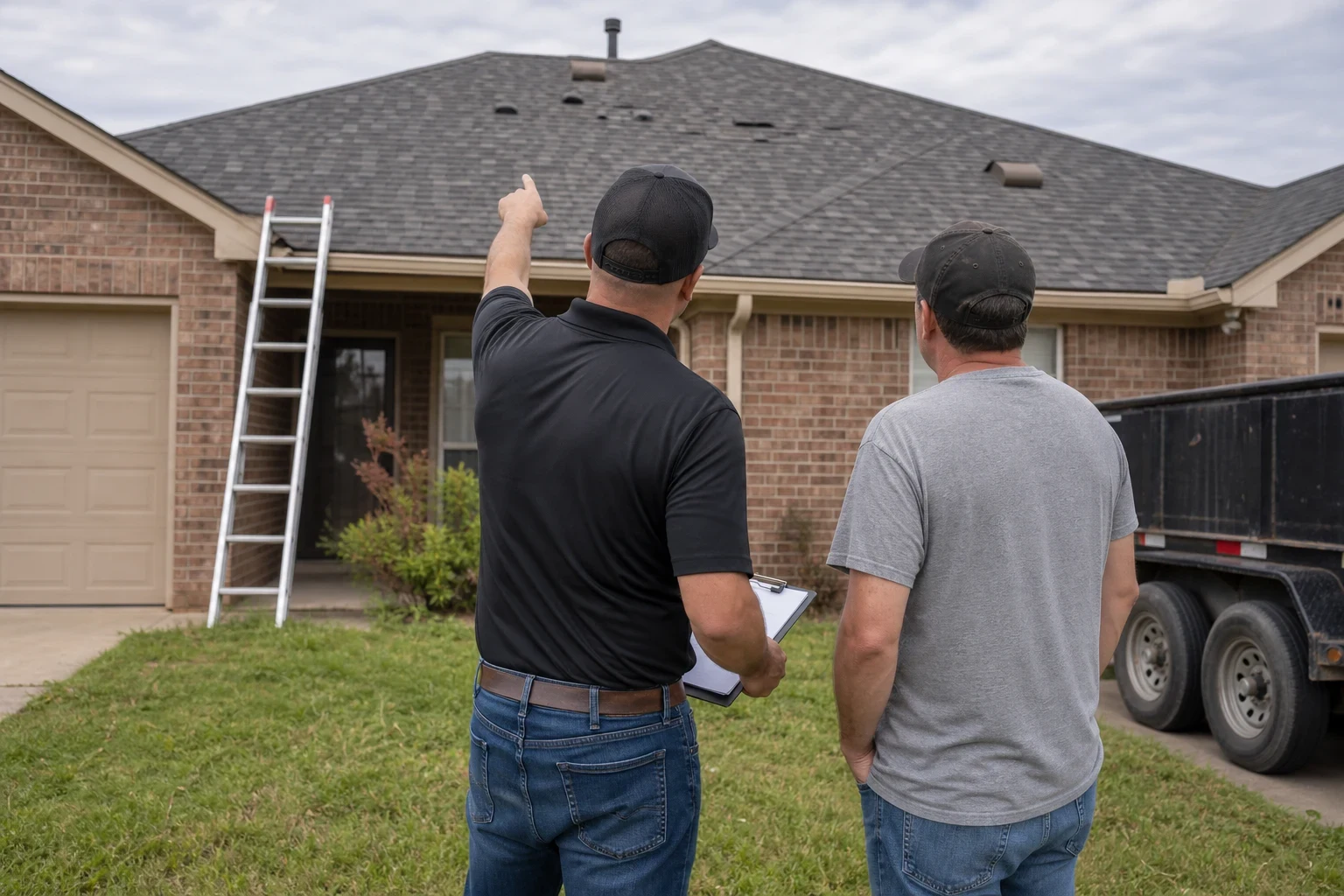
Anything worth mentioning gets photographed, whether it's a problem or a part that's holding up well. We go through every picture with you so nothing is left to guesswork.
Signs It's Time for a Roof Inspection
- A storm just rolled through
- Hail and strong wind can damage a roof without leaving anything you'd notice from the yard. If roofers start appearing on your street after a spring storm, it's wise to have yours checked too.
- Stains on a ceiling or wall
- Brown rings, bubbling paint or a damp, musty odor in a bedroom upstairs are common clues that water is finding its way in. The spot where it enters the roof is often several feet away from the mark you see indoors.
- Granules in the gutters
- Some loose grit right after shingles are installed is expected. If you keep finding heaps of it years down the road, the shingles are losing their protective layer.
- You're buying or selling a home
- An inspection tells buyers what they're getting into, and it lets sellers handle minor issues before they turn into bargaining chips.
- It's been years since anyone looked
- If nobody has been up on your roof in longer than you can recall, a check is a good idea, especially once the roof is past the middle of its life.
How Your Inspection Goes
- 1
A quick phone conversation
You tell us why you're calling, whether it's a leak, a recent storm or a home sale. We ask a few questions about the roof's age and set a time that works for you.
- 2
Ground and roof check
We start by walking around your home to study the roofline, gutters and edges from the yard. Then we head up and work across each section one at a time, taking photos of anything that stands out. We watch our footing so the inspection itself doesn't add wear.
- 3
A look inside the attic
With your okay, we check the attic for moisture, daylight and airflow. It's usually a quick stop, and it tells us a lot.
- 4
Reviewing the results together
Once we're back on the ground, we go through the photos with you and sort everything into what's in good shape, what needs attention soon and what can wait. If repairs make sense, you'll get a clear written estimate. If the roof needs nothing, we'll say that plainly.
What Affects the Cost of an Inspection
Every roof is a little different, so we price inspections based on the roof in front of us. We'll talk through what's involved on the phone so you know what to expect before we come out. There are no add-ons sprung on you afterward.
- Roof size and pitch
- A larger or steeper roof takes more time to walk safely and photograph thoroughly.
- Height and access
- Two-story homes, tight side yards and roofs that need extra safety setup add time on the day.
- Attic access
- An easy attic hatch is quick. A cramped or hard-to-reach attic takes longer to check properly.
- Type of report you need
- A simple walkthrough for your own planning is different from a detailed photo report for a home sale or an insurance claim.
Roof Inspection Questions
- How long does a roof inspection take?
- Most take about an hour. A larger or steeper roof can add a bit of time. That hour includes the walk around your home, the time on the roof, the attic check and our conversation about the photos, so it fits into a morning or an afternoon.
- Do I need to be home?
- We'd prefer it, since we like to check the attic and share the results with you in person. If your schedule doesn't allow that, we can inspect the exterior and go through the photos with you over the phone afterward.
- Will you try to sell me a new roof?
- No. Plenty of our inspections end with one or two small fixes, and some find nothing that needs doing. You see the same photos we do, so the decision stays yours. If your roof has good years left, we'll say so.
- Can an inspection help with an insurance claim after hail?
- It can. We document the damage with dated photos and written notes you can share with your insurance company. We don't act as your adjuster, but we can explain what we found and what it means for your roof, so you're ready when you talk with them.
- How often should I have my roof inspected?
- For most roofs, once every year or two works well, with an extra look whenever hail or high winds hit hard. After a roof reaches about fifteen years old, more frequent checks make sense, because older shingles let small problems spread faster.
- What happens if you find a problem?
- We show you the photo, explain what's going on and hand you a written estimate. If you want us to handle it, the same crew comes back for the roof repair, or for a roof replacement if the roof truly needs one.
Find Out Where Your Roof Stands
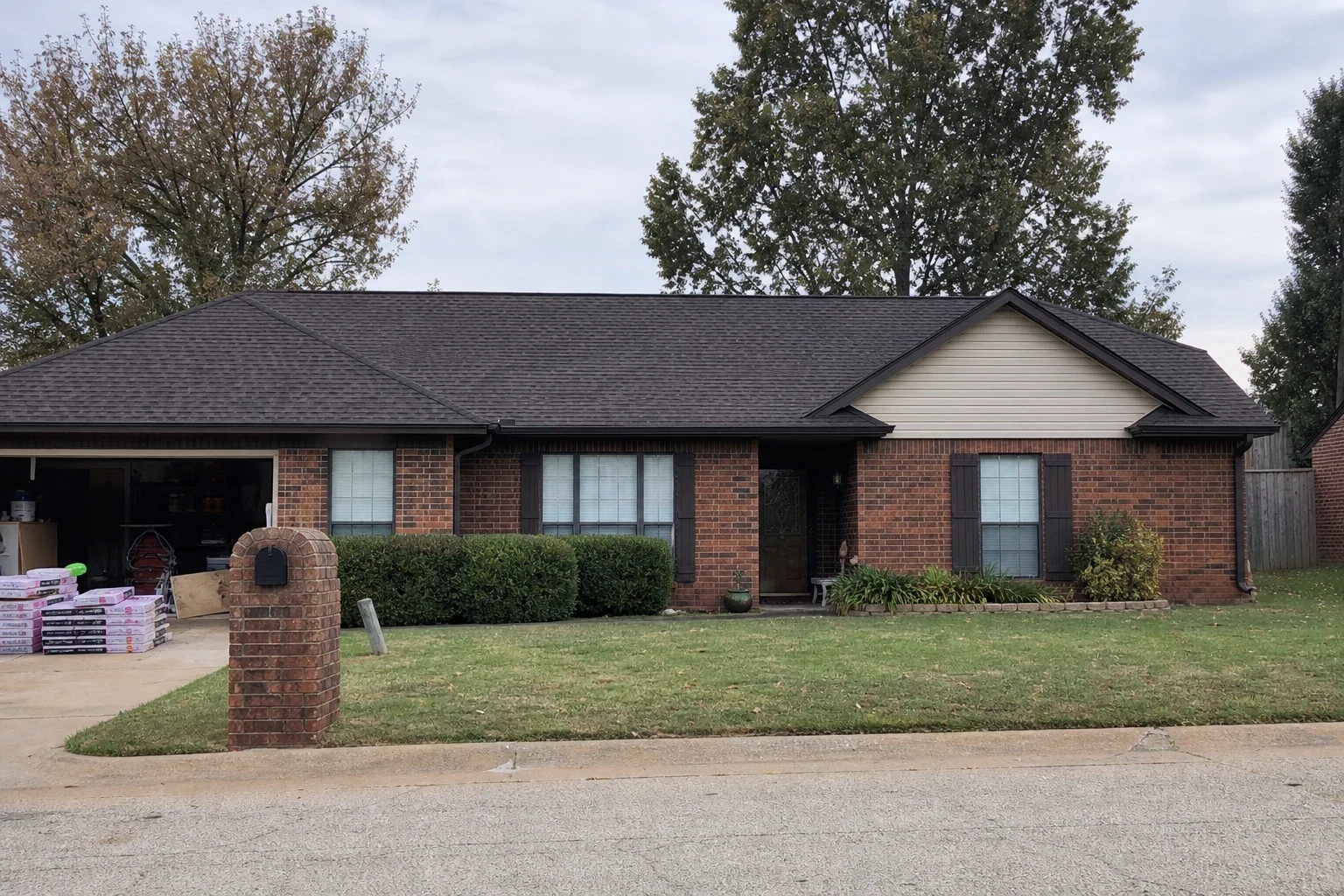
An inspection gives you facts instead of guesses. Give us a call, tell us what's on your mind, and we'll set a time to come take a careful look at your home's roof.