ServicesCommercial Roof Replacement
Commercial Roof Replacement in Purcell
When patching a flat or low-slope roof stops working, we replace it in planned sections so your business keeps running. The same small crew handles your building from the first core cut to the final walk, so you always know who is on your roof.
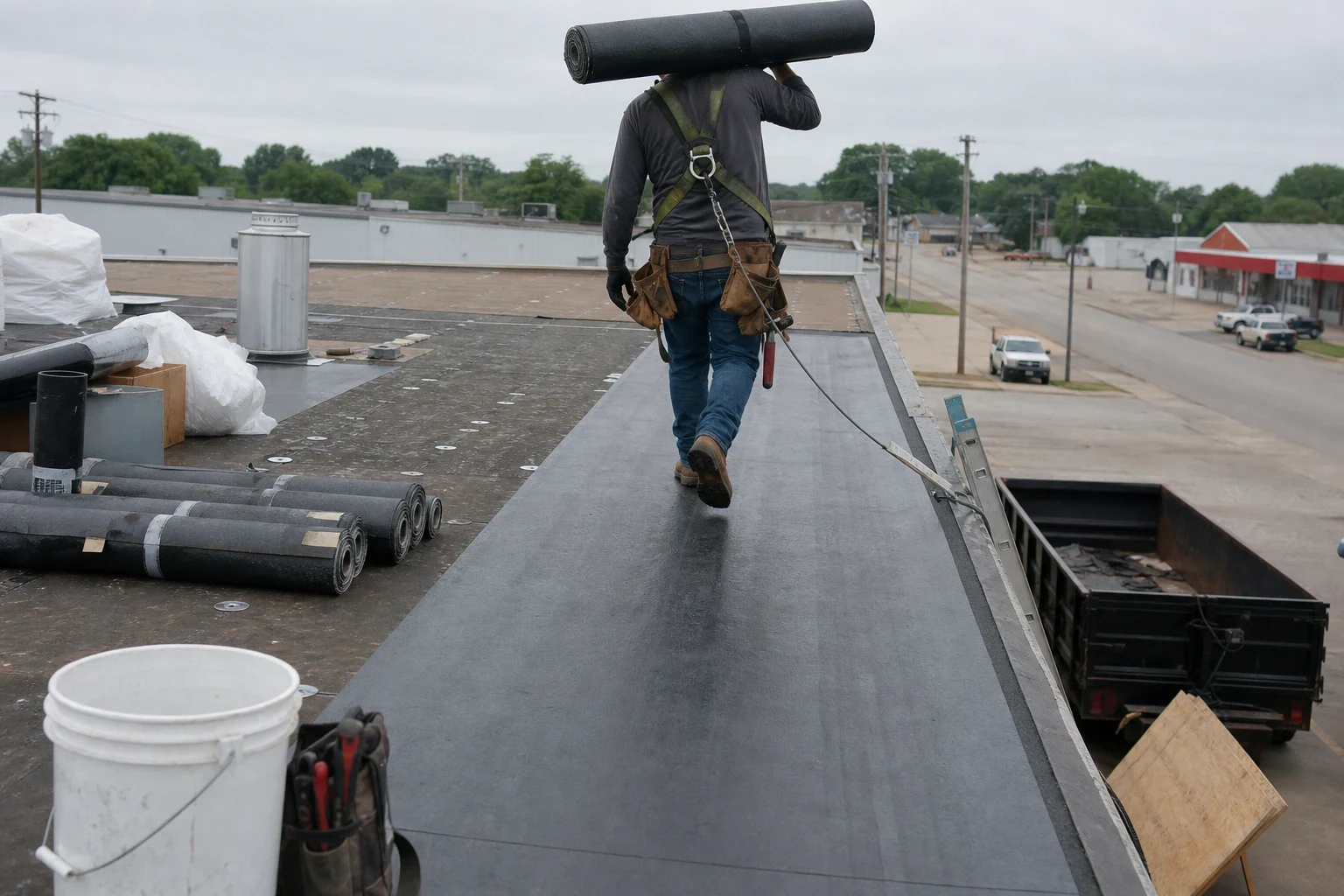
When a new roof makes more sense than another repair
Commercial roofs rarely give out all at once. Seams pull apart a bit more with each hot summer, the insulation below takes on water, and leaks start showing up in new places until the source is hard to pin down. By then, each repair bill mostly postpones the inevitable.
Before we recommend anything, we check the whole roof system. If commercial roof repair is still the better choice, you will hear that from us. If replacement is the right move, we lay out the reasons, share the pictures we took up top and put the numbers in writing, item by item.
Our team stays small by choice. The people measuring your roof are the same people tearing it off and installing the new one, and they are who you reach when something comes up mid-job.
What a commercial replacement includes
- Moisture survey and core cuts
- We cut small test cores to see how many layers are on the roof and whether the insulation is wet. That tells us if a recover is allowed or if a full tear-off is needed.
- Tear-off and deck repair
- Old membrane and wet insulation come off down to the deck. Rusted metal deck or rotted wood is replaced before anything new goes down, and we photograph it for your records.
- Insulation and tapered drainage
- New polyiso boards go down, often with tapered sections that push water toward drains and scuppers. Ponding water is one of the main reasons flat roofs wear out early, so we design the slope to stop it.
- Membrane or metal system
- We install TPO, EPDM, modified bitumen or metal, depending on your building, budget and how long you plan to own it. We walk you through how each one handles heat, hail and foot traffic.
- Flashing, curbs and edges
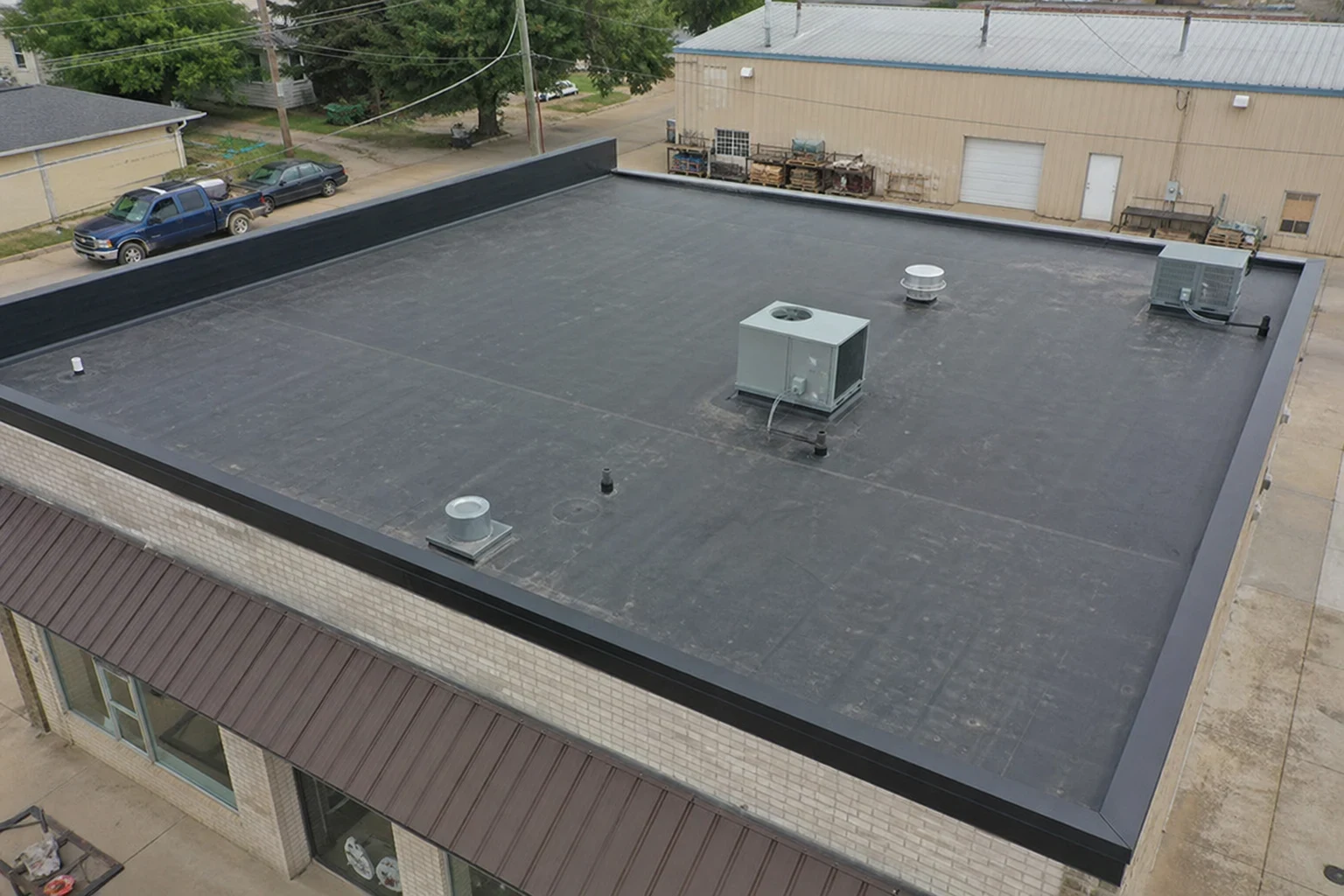
- Parapet walls, HVAC curbs, pipe penetrations and roof edges are where most leaks start. Each one gets new flashing tied into the new membrane.
- Cleanup and final walk
- We sweep the site for fasteners and debris every day and walk the finished roof with you before we call it done.
Signs your commercial roof is due
Leaks that keep coming back
When the same spots drip again after every fix, water is probably moving under the membrane through soaked insulation.
Puddles that linger after a storm
If water is still sitting on the roof a couple of days after the rain stops, the deck may have sagged or the roof never drained properly. Those puddles wear out seams faster and put extra weight on the structure.
Blisters, splits and open seams
Bubbling in modified bitumen, EPDM shrinking back from the edges and cracked TPO seams are all signs a membrane is close to worn out.
Soft spots underfoot
A roof that feels spongy as you walk it usually has wet insulation below or a deck that is starting to weaken.
Hail bruising across the field
Lots of small impact marks after a hailstorm can turn into cracks over time, even before any leak appears. Our storm damage repair page explains what to check after a storm.
How the job runs from start to finish
- 1
Inspection and options
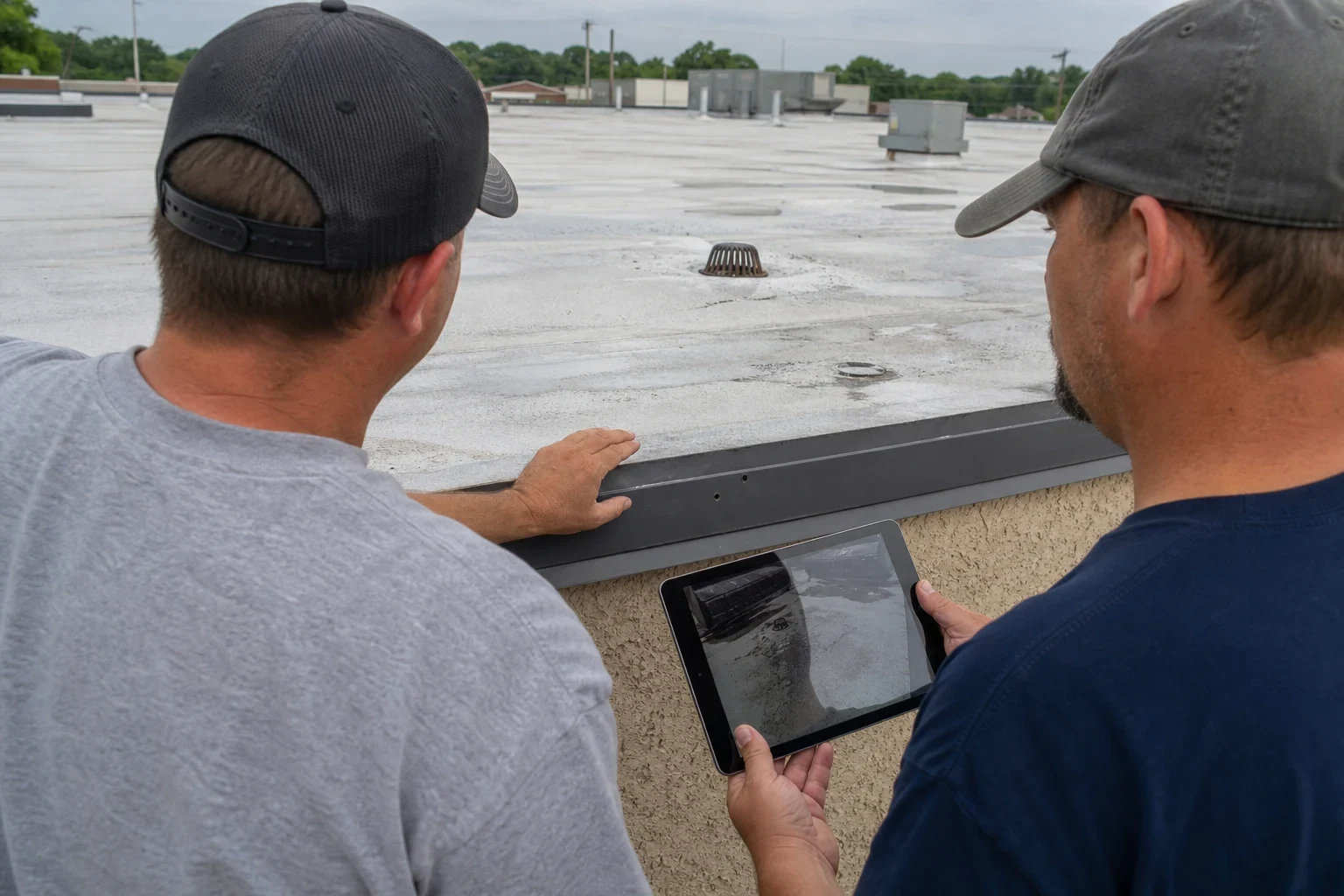
We walk the roof, take cores and photos, and talk with you about how the building is used. Then you get a written estimate with each line explained.
- 2
Permit and schedule
We pull the permit and set a schedule around your business hours, deliveries and tenants. If certain areas cannot be disturbed on certain days, we plan the sections around that.
- 3
Section-by-section install
We only open as much roof as we can dry in the same day. Each section is torn off, repaired, insulated and sealed before we move on, so an afternoon storm does not reach your inventory or equipment.
- 4
Inspection and walkthrough
Once the roof passes inspection, we walk it with you, point out the drains and flashings and hand over the photos from the job.
What moves the cost of a new commercial roof
No two buildings carry the same roof, so your number comes from the measurements and core samples we take on site. The estimate breaks the job into its parts, which makes it easy to see where the money goes and to weigh one system against another.
- Roof size and access
- Square footage matters, but so does how we get materials up. Tight lots, tall walls or limited staging space add time.
- Tear-off or recover
- A dry roof with a single existing layer may qualify for a recover where code allows, which usually costs less. Wet insulation or several old layers mean everything comes off.
- Deck condition
- Rusted metal or rotted wood decking gets replaced before the new system goes down. You see photos of it before that work is added to the job.
- Membrane and insulation choice
- TPO, EPDM, modified bitumen and metal each carry different material and labor costs. Thicker insulation and tapered drainage raise the price up front but can trim cooling bills and help the roof last longer.
- Rooftop equipment
- Every HVAC unit, vent and skylight needs its own flashing work. Units that have to be lifted or disconnected add another step.
Commercial roof replacement questions
Something not covered here? (405) 883-5339
Can my business stay open while you replace the roof?
In most cases, yes. We work in sections and dry in every area by the end of each day. Noise is the main disruption, so we plan the loudest tear-off work for times that bother your customers and staff the least.
Which roofing system is right for my building?
It depends on your roof slope, how much foot traffic it gets and how long you plan to own the building. TPO is common for its reflective surface in hot summers, EPDM handles movement well, and metal suits low-slope roofs with enough pitch. We explain the tradeoffs and let you decide.
Do you have to tear off the old roof?
Not always. If core cuts show dry insulation and only one existing layer, a recover may be allowed and can save money. If the insulation is wet, covering it traps the moisture, so we will recommend a tear-off.
Will I deal with different crews during the job?
No. Our small team stays on your building from the first inspection to the final walk. You will know the people on your roof and have one point of contact the whole time.
Can insurance help after hail damage?
If a storm damaged the roof, your policy may cover part of the replacement. We document the damage with photos and measurements and can meet your adjuster on the roof, but the coverage decision is between you and your insurer.
Ready to stop chasing leaks?
Tell us about your building and what has been happening on the roof. We will set a time to come look and talk through repair or replacement honestly.